Launch offer — valid today only

📄 Digital book in PDF · read it on your phone or print it

HVAC and EPA 608 in Drawings: Know What Every Reading Means HVAC Technician Illustrated · One Topic per Page

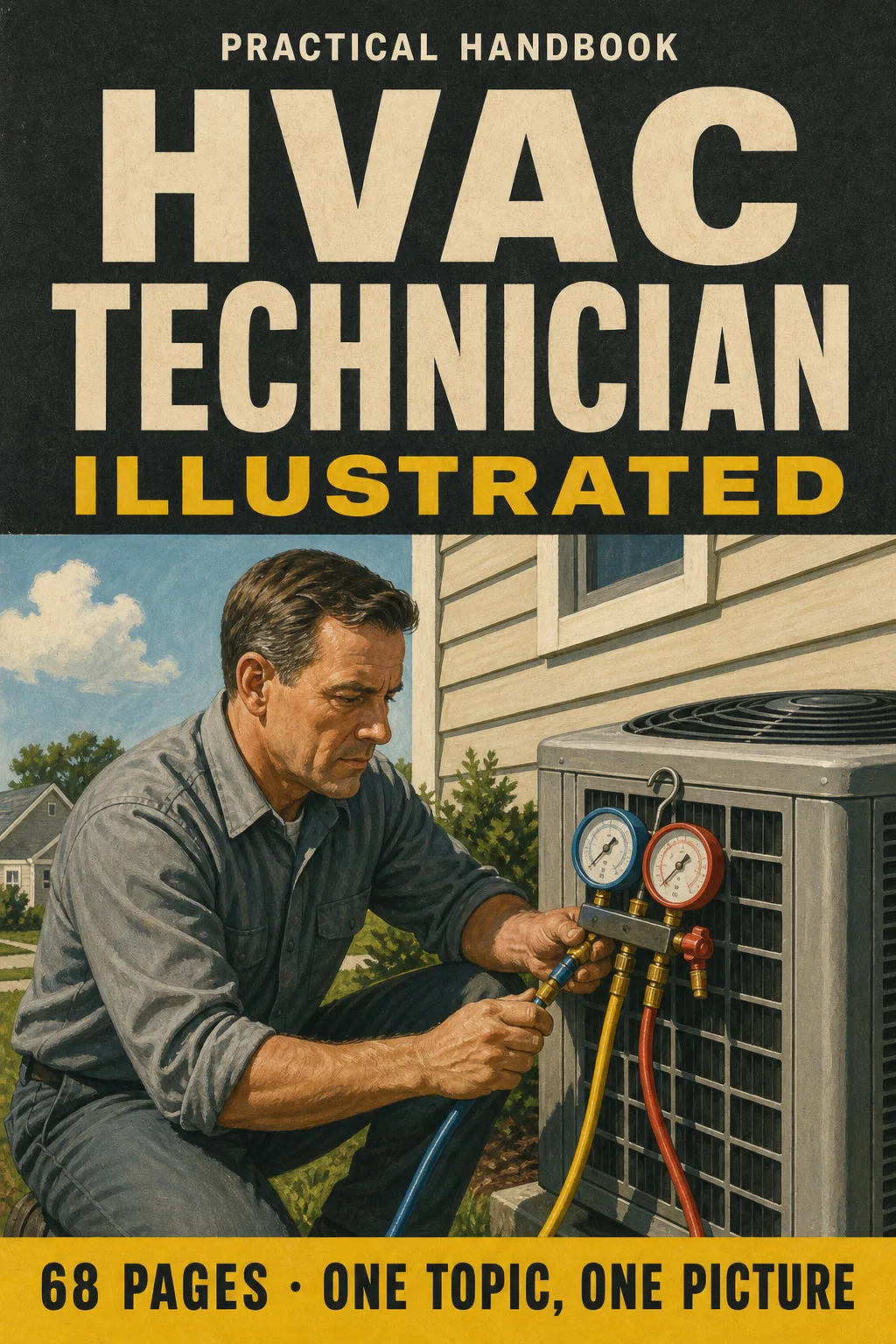
HVAC Technician Illustrated: the refrigeration cycle, manifold gauges, superheat and subcooling, airflow, thermostat wiring, gas furnaces, heat pumps, EPA 608, the new A2L refrigerants (R-454B, R-32) and troubleshooting. Every topic gets its own page: the drawing first, then what you need to remember. 68 illustrated pages.

I WANT THE ILLUSTRATED HVAC BOOK

🔒 Secure checkout · PDF by email · 30-day guarantee

Every topic, its own pageEach system and each step drawn, with the explanation right beside it
68 illustrated pages9 parts, from the refrigeration cycle to no-cool and no-heat calls
Up-to-date sourcesEPA Section 608 (40 CFR Part 82) and AIM Act rules (40 CFR Part 84)
PDF by emailFormat

Look Inside the Book

Every page has one big drawing and a box with the numbers and steps you need to know:

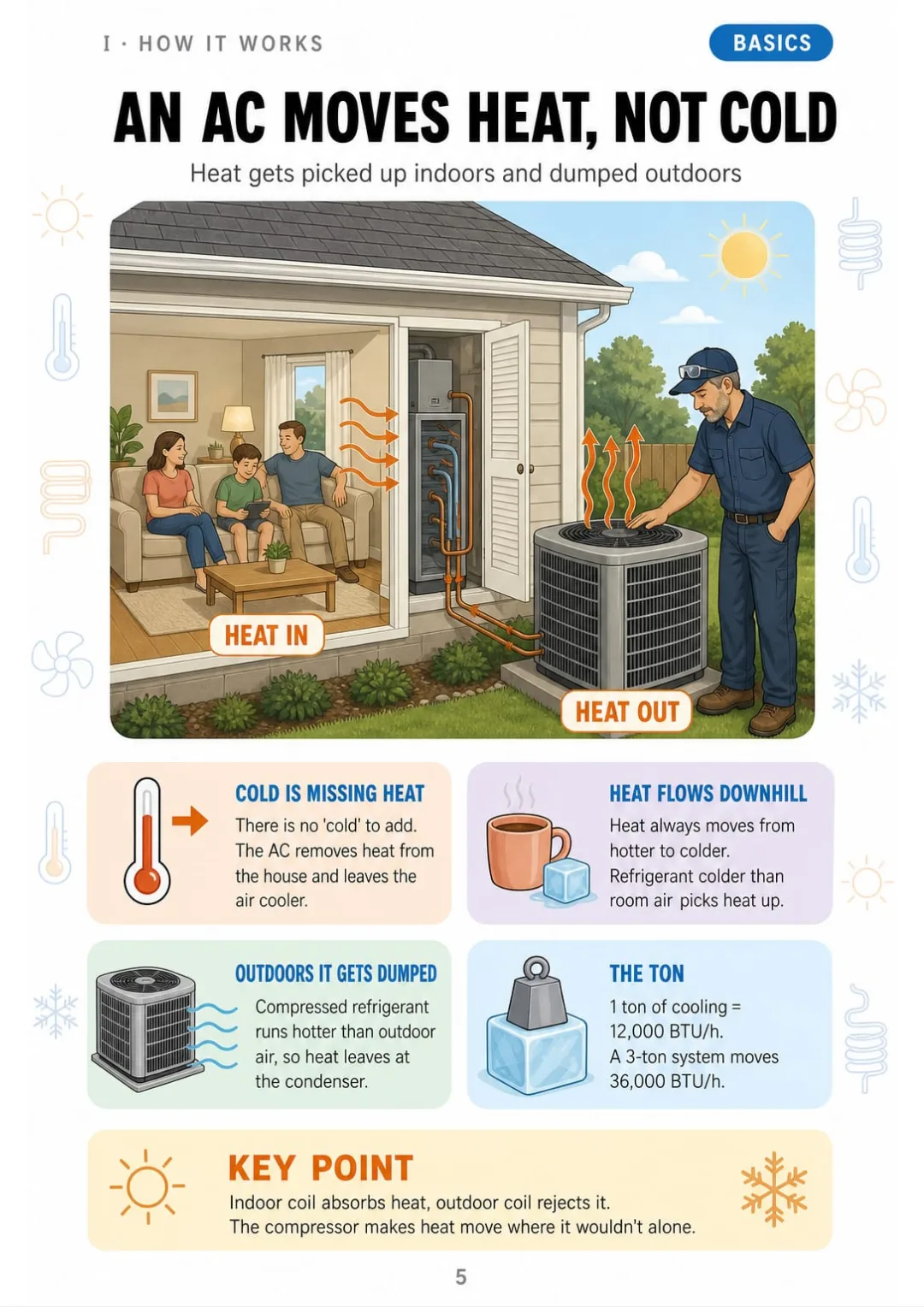
Heat in at the indoor coil, heat out at the condenser · 1 ton = 12,000 BTU/h
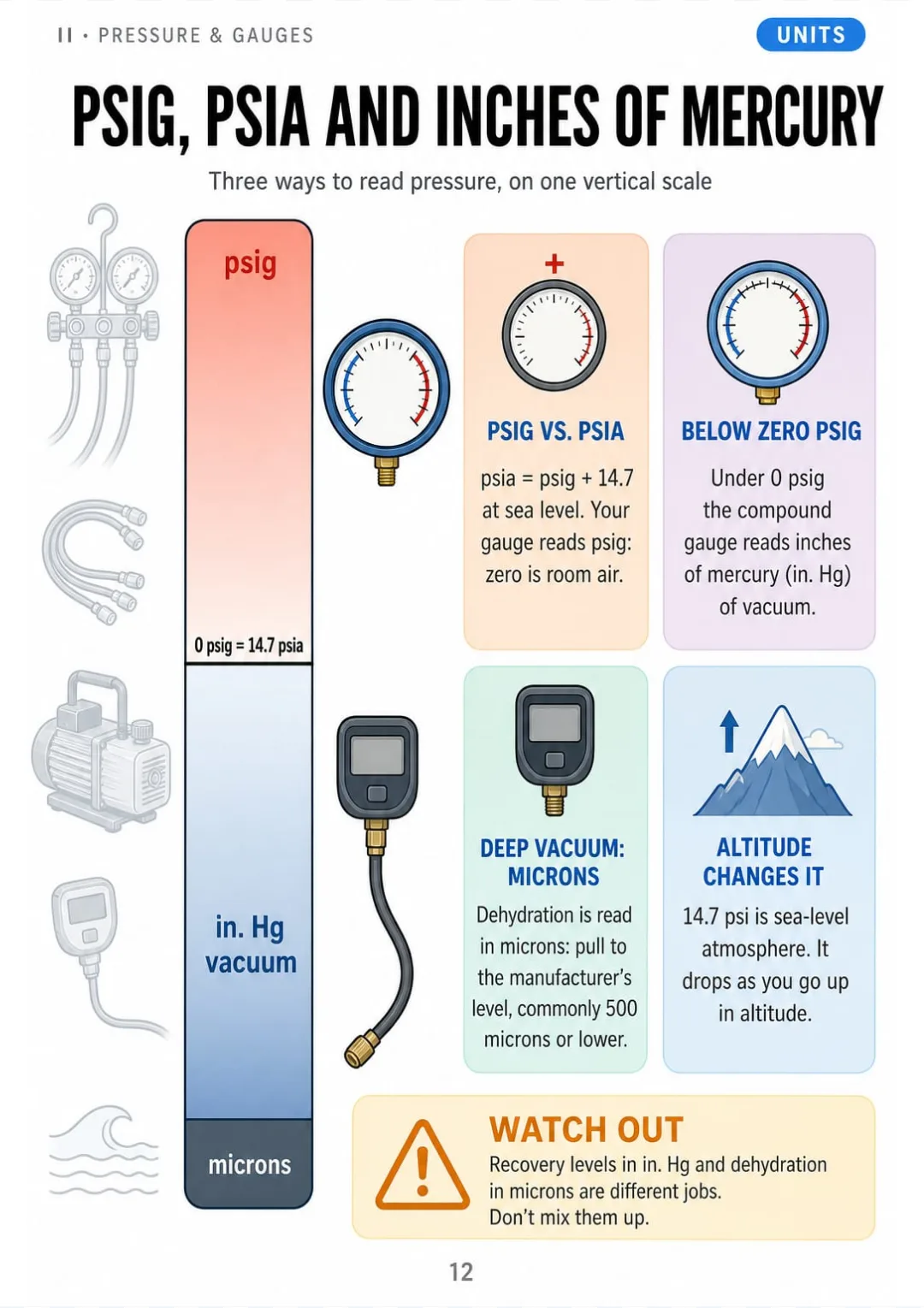
psia = psig + 14.7 at sea level; below 0 psig, read in. Hg, then microns
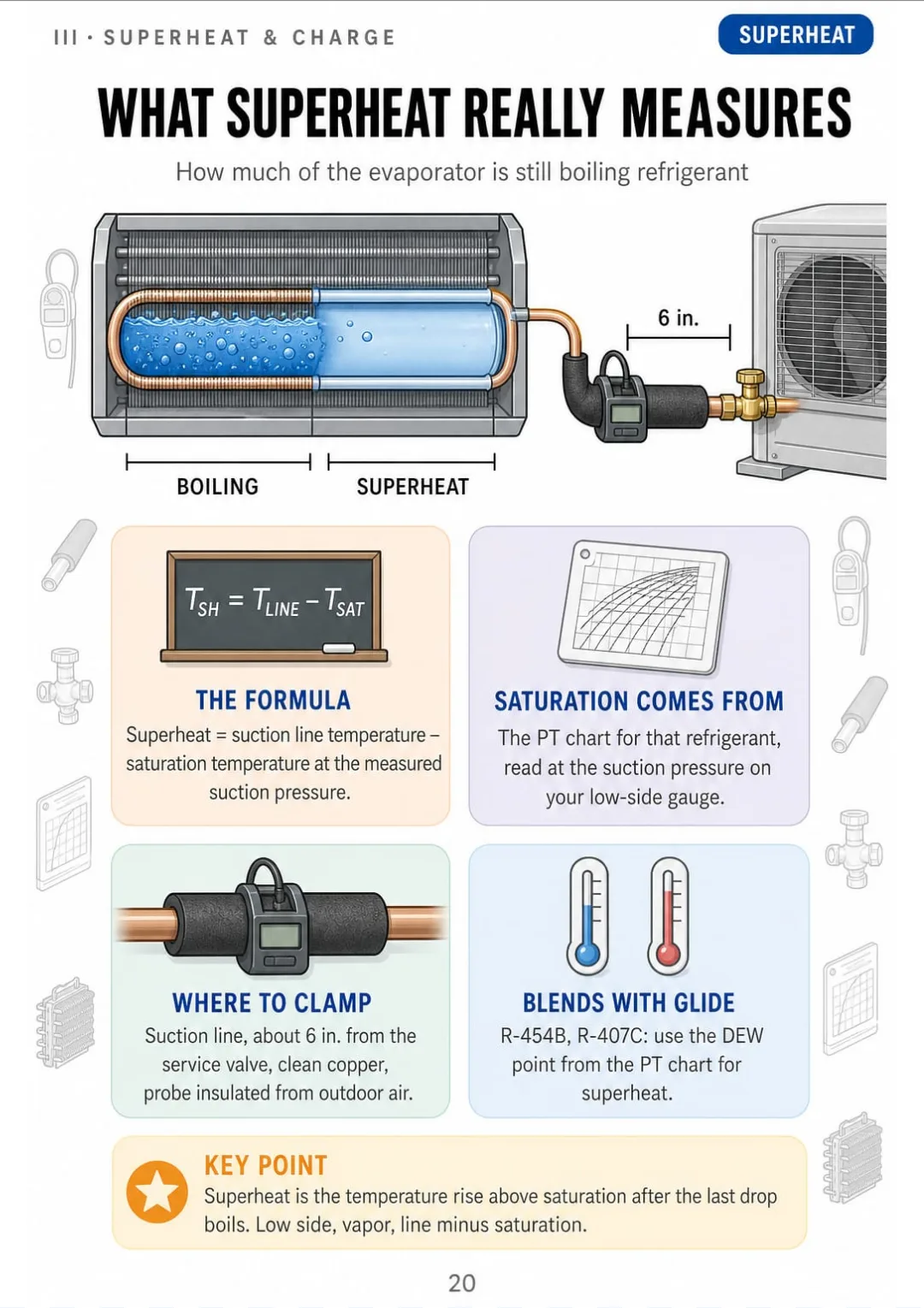
Superheat = suction line temp − saturation temp, probe 6 in. from the service valve
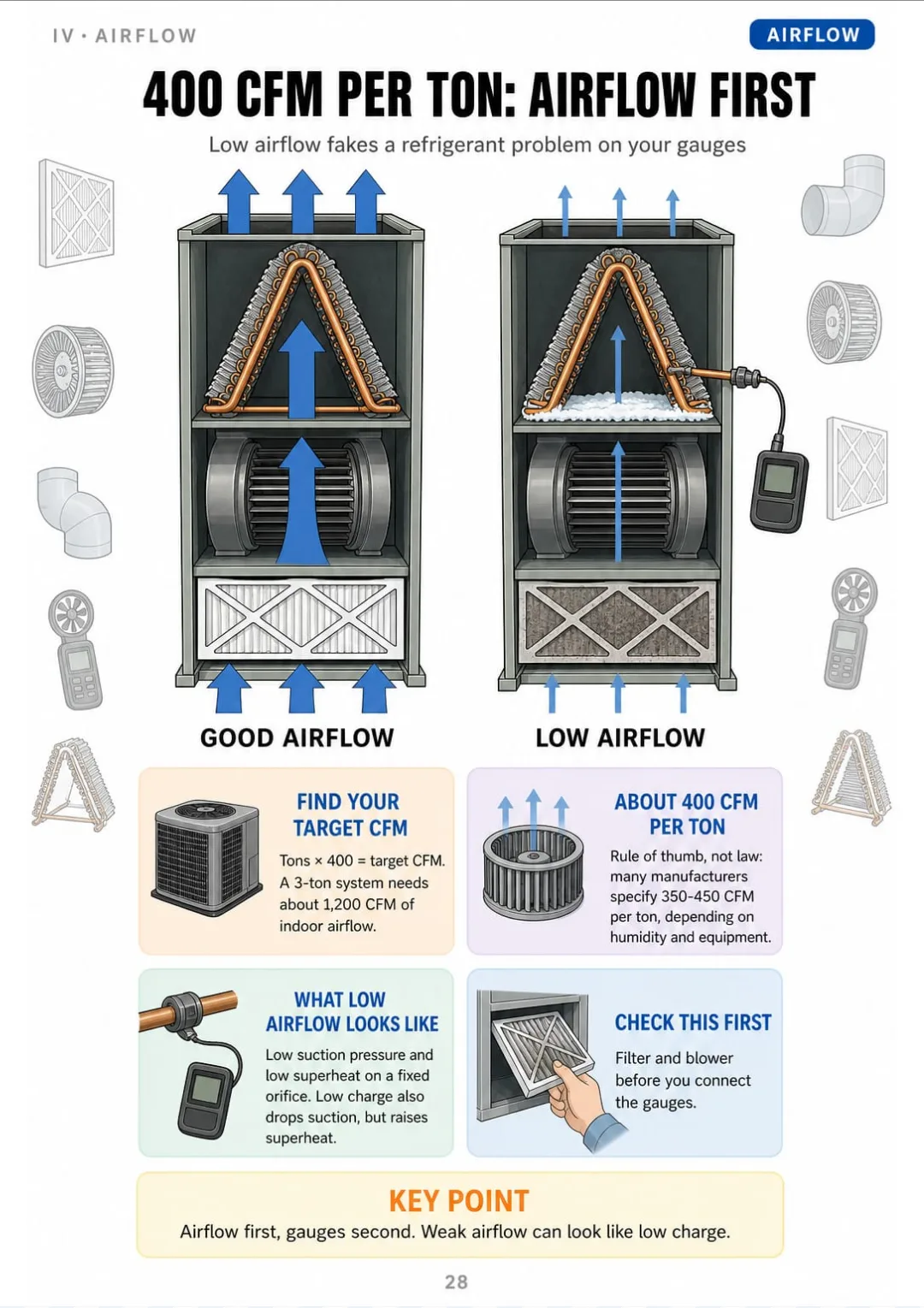
About 400 CFM per ton (350-450): low airflow drops suction, and superheat on fixed orifice
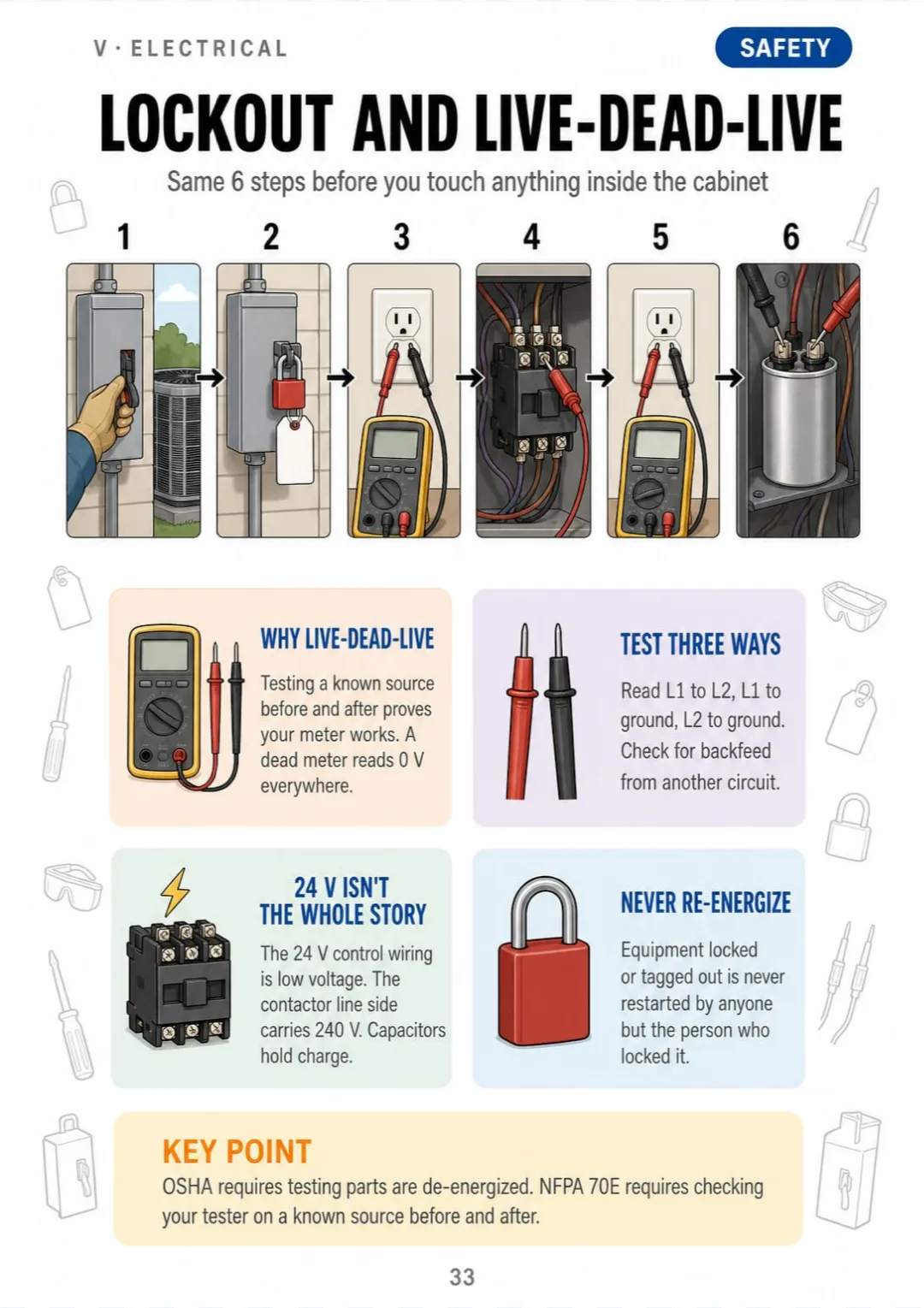
Lockout in 6 steps: the meter is tested on a live source before and after
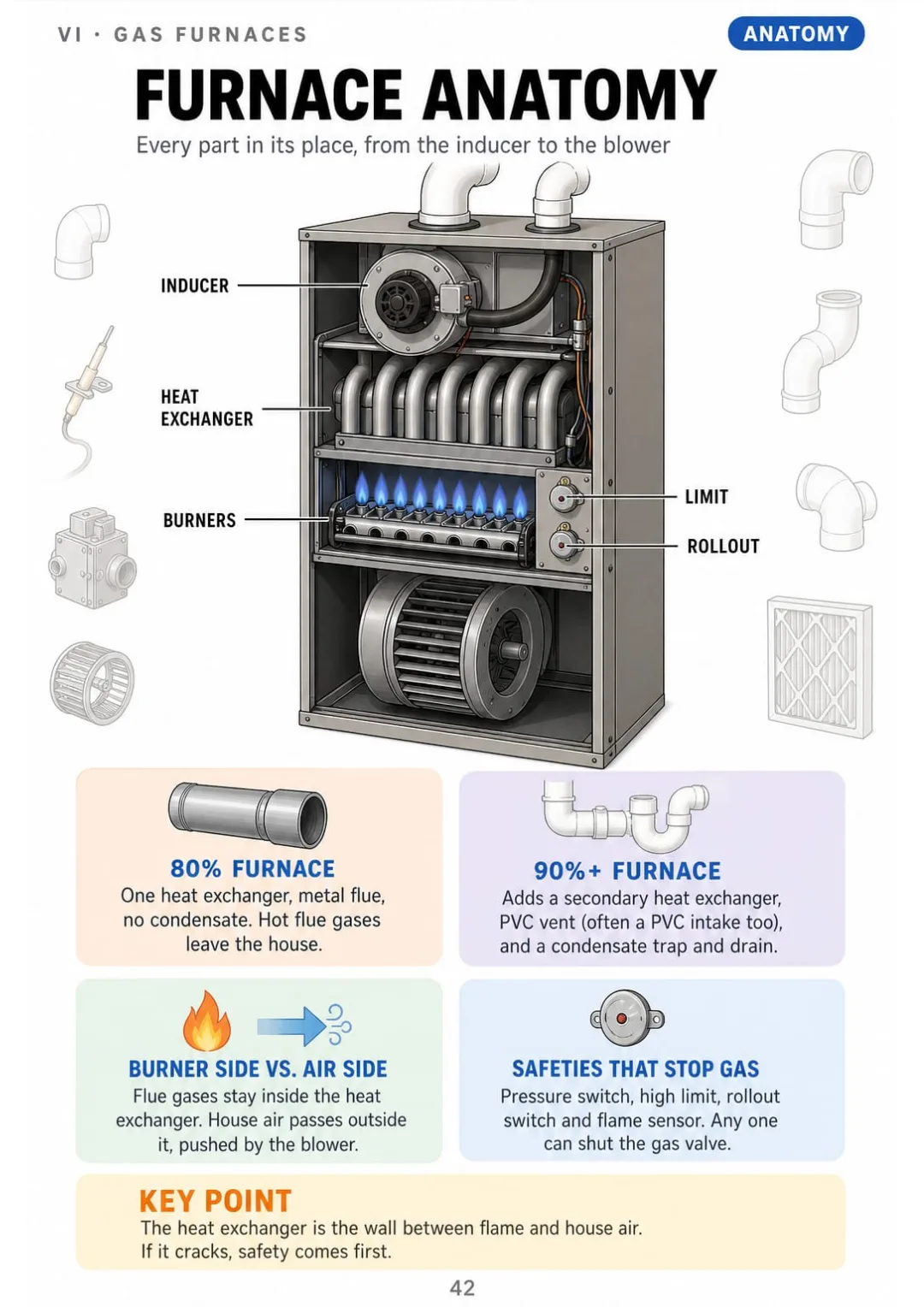
Cutaway of a 90%+ furnace: inducer, pressure switch, igniter, gas valve, burners, flame sensor, heat exchanger, blower.
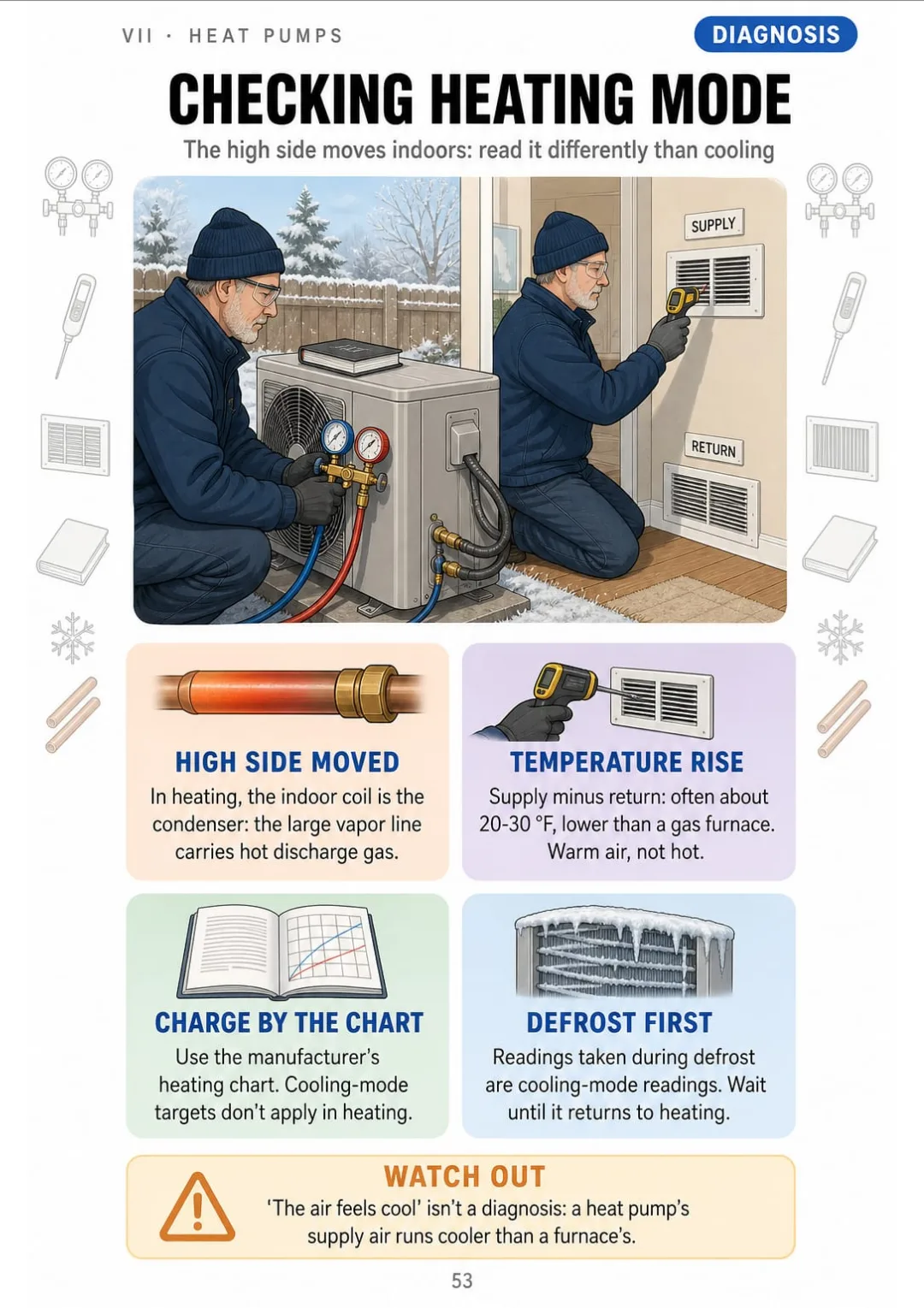
Heating check: high side at the indoor coil, rise often about 20-30 °F, charge by the heating chart.
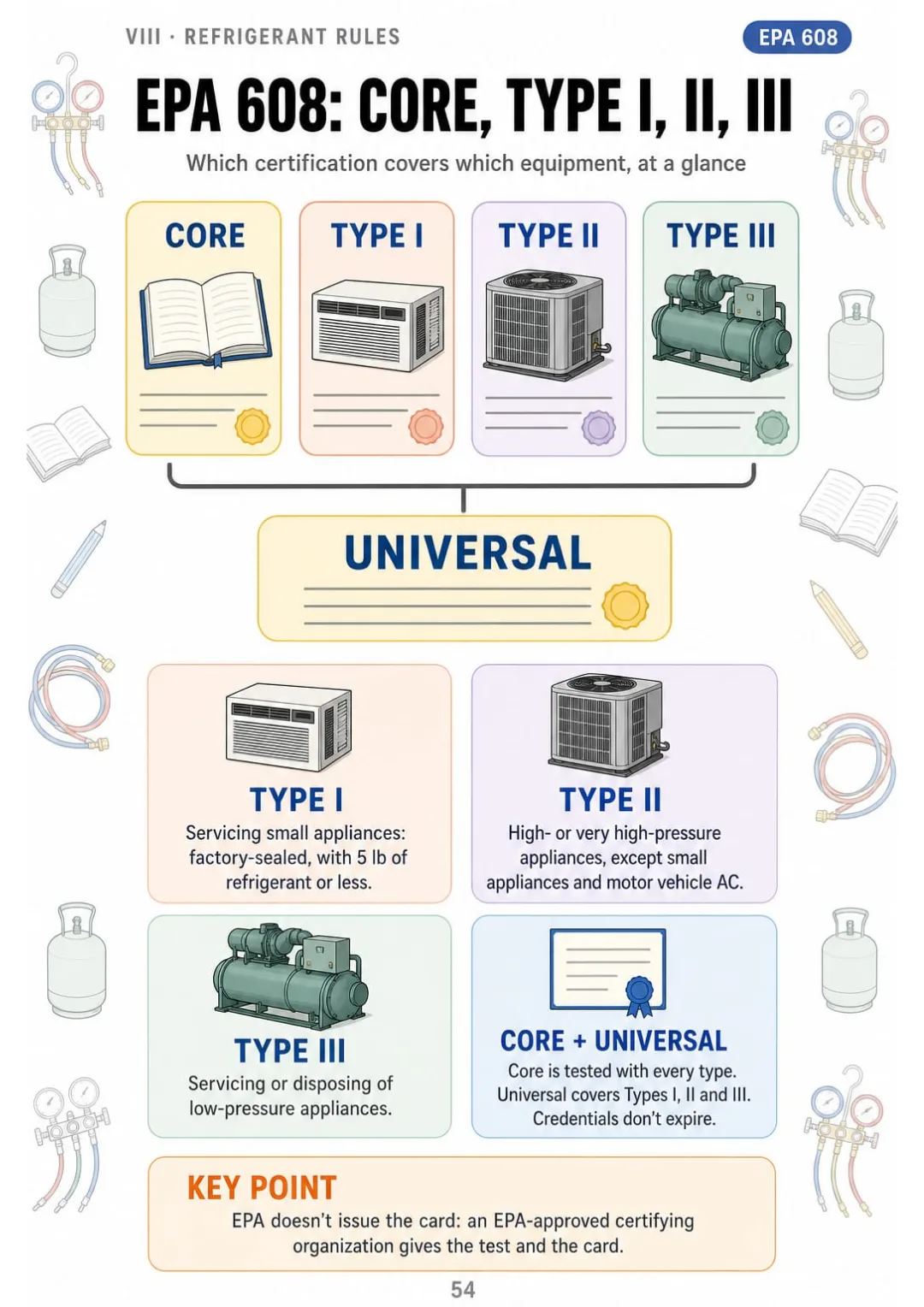
Type I = 5 lb or less · Type II = high and very high pressure · Type III = low pressure · Universal = all

Swipe to see more →

These are real pages from the book. The table of contents is the full one: 9 parts and 64 topics.

The Problem Isn't You. It's How It Was Explained to You.

You're at a condenser on a 95°F afternoon, gauges hooked up, and the homeowner is standing right behind you. Suction pressure looks low. Is it short on charge, or is it the airflow?

You studied superheat. But the manual gives it to you in three paragraphs of definitions, and every video uses a different example. With someone watching, a definition doesn't tell you where to put the probe.

Superheat = suction line temp − saturation temp, probe 6 in. from the service valve

In this book, superheat is one page. The suction line is drawn, the clamp sits 6 inches from the service valve, and the formula is in a box: suction line temperature minus saturation temperature. You see what you're measuring before you do the math.

Same with the rest: the 4 components of the cycle, the manifold gauge set part by part, 400 CFM per ton, thermostat wiring R, C, W, Y, G, O/B, the furnace sequence in 8 steps. Each one has its own page.

So on the next call you take the reading, you know what the number means and you make the decision without going back to the manual.

COMPARE FOR YOURSELF

The Same Topic, Two Ways to Study It

THIS
  • The manual: line after line after line
  • Pressure scales explained only in words
  • You show up to the job, or the exam, still unsure
Gauge pressure (psig) is pressure measured relative to the surrounding atmospheric pressure, whereas absolute pressure (psia) is referenced to a perfect vacuum. At sea level, standard atmospheric pressure is approximately 14.7 psi; accordingly, absolute pressure is obtained by adding atmospheric pressure to the gauge reading. Pressures below atmospheric are customarily expressed in inches of mercury vacuum, while the deep vacuum levels attained during system evacuation are measured in microns, one micron being equal to one-thousandth of a millimeter of mercury, as discussed in subsequent sections.
FOR THIS
  • psig, psia and vacuum in one drawing
  • The 14.7 and the microns in a box
  • You see it and it makes sense
psia = psig + 14.7 at sea level; below 0 psig, read in. Hg, then microns
CONTENTS

Take a Look at the 9 Parts and 64 Topics

How the system works, pressure and gauges, superheat and subcooling, airflow, electrical and controls, gas furnaces, heat pumps, EPA 608 and A2L rules, and troubleshooting: 68 pages, all illustrated.

IHow the System Works · pp. 5-11
  1. Heat Moves From Hot to Cold, Never the Other Way
  2. The 4 Components of the Refrigeration Cycle
  3. Low Side in Blue, High Side in Red
  4. The 3 States of Refrigerant in the Loop
  5. Latent vs. Sensible Heat
  6. Split System Anatomy: Outdoor and Indoor
  7. Metering Devices: Fixed Orifice vs. TXV
IIPressure, Temperature and Gauges · pp. 12-19
  1. psig, psia and Inches of Mercury
  2. The Pressure-Temperature Relationship
  3. How to Read a PT Chart
  4. The Manifold Gauge Set, Part by Part
  5. Hooking Up Gauges Without Losing Charge
  6. Typical Operating Pressures for R-410A
  7. Refrigerants Compared: R-22, R-410A, R-454B, R-32
  8. Glide: Bubble Point and Dew Point
IIISuperheat, Subcooling and Charge · pp. 20-27
  1. What Superheat Really Measures
  2. Superheat: Worked Example in 3 Steps
  3. What Subcooling Really Measures
  4. Subcooling: Worked Example in 3 Steps
  5. Superheat vs. Subcooling: Don't Mix Them Up
  6. Charging a Fixed Orifice System by Target Superheat
  7. Charging a TXV System by Subcooling
  8. Reading the 4 Numbers Together
IVAirflow Before Refrigerant · pp. 28-32
  1. 400 CFM per Ton: Why Airflow Comes First
  2. Temperature Split Across the Coil
  3. Static Pressure Like Blood Pressure
  4. The Usual Airflow Killers
  5. Frozen Evaporator Coil: Airflow or Charge?
VElectrical and Controls · pp. 33-41
  1. Electrical Safety: Lockout and Live-Dead-Live
  2. Volts, Amps, Ohms: Ohm's Law on One Page
  3. The 24 V Control Circuit and the Transformer
  4. Thermostat Wiring: R, C, W, Y, G, O/B
  5. The Contactor
  6. Run Capacitors: HERM, FAN, C
  7. Compressor Windings: C, S, R
  8. Amp Draw vs. RLA and LRA
  9. Reading a Ladder Diagram
VIGas Furnaces · pp. 42-48
  1. Furnace Anatomy
  2. Sequence of Operation in 8 Steps
  3. Flame Sensing and Microamps
  4. Pressure Switch and Venting
  5. Gas Pressure and Temperature Rise
  6. Limit and Rollout Switches
  7. Carbon Monoxide and Combustion Safety
VIIHeat Pumps · pp. 49-53
  1. A Heat Pump Is an AC That Runs Backward
  2. The Reversing Valve
  3. Defrost: Why and How
  4. Aux Heat, Emergency Heat and Balance Point
  5. Checking a Heat Pump in Heating Mode
VIIIRefrigerant Rules: EPA 608 and A2L · pp. 54-60
  1. EPA 608: Core, Type I, II, III, Universal
  2. No Venting: What the Law Says
  3. Recovery, Recycling, Reclaiming
  4. Recovery Cylinders: 80 % Rule and Colors
  5. Evacuation and Leak Testing
  6. The AIM Act Transition: Why R-410A Is Being Replaced
  7. Working With A2L Refrigerants Safely
IXTroubleshooting and Review · pp. 61-68
  1. The Diagnostic Order: Same 4 Steps Every Call
  2. No-Cool Call: Outdoor Unit Not Running
  3. No-Cool Call: Unit Running, Air Not Cold
  4. No-Heat Call: Gas Furnace
  5. No-Heat Call: Heat Pump
  6. Brazing With Nitrogen
  7. The Most Frequent Mistakes, Drawn
  8. One-Page Review: Formulas and Numbers

One Page, One Topic, All Clear

Think of it this way:

It's January, a no-heat call. The inducer starts, the igniter glows, the burners light… and a few seconds later they shut off. You need to know which step of the sequence failed.

You open the book to the furnace sequence page and see it drawn in 8 steps, in order: call for heat, inducer, pressure switch, igniter, gas valve, burners, flame sensing, blower. Burners that drop out after a few seconds send you to flame sensing, and that has its own page, with microamps.

Lockout in 6 steps: the meter is tested on a live source before and after

Same with the reversing valve, defrost, the run capacitor terminals HERM, FAN and C, the 80% rule for recovery cylinders and the diagnostic order for a no-cool call: each one on its own page.

HVAC Technician Illustrated is 9 parts and 64 topics, all drawn, and it closes with the most frequent mistakes, drawn, and a one-page review of formulas and numbers.

What you see drawn, you don't have to memorize.

What's Inside HVAC Technician Illustrated:

Ipp. 5-11

How the System Works

Heat moving from hot to cold, the 4 components of the cycle, low side in blue and high side in red, the 3 states of refrigerant, latent vs. sensible heat, split system anatomy, fixed orifice vs. TXV

IIpp. 12-19

Pressure, Temperature and Gauges

psig, psia and inches of mercury, the pressure-temperature relationship, reading a PT chart, the manifold gauge set part by part, hooking up without losing charge, R-410A operating pressures, R-22 vs. R-410A vs. R-454B vs. R-32, glide

IIIpp. 20-27

Superheat, Subcooling and Charge

What superheat and subcooling really measure, a worked example of each in 3 steps, how not to mix them up, charging fixed orifice and TXV systems, reading the 4 numbers together

IVpp. 28-32

Airflow Before Refrigerant

400 CFM per ton, temperature split across the coil, static pressure, the usual airflow killers, and a frozen coil: airflow or charge

Vpp. 33-41

Electrical and Controls

Lockout and live-dead-live, Ohm's law, the 24 V control circuit, thermostat wiring R, C, W, Y, G, O/B, the contactor, run capacitors, compressor windings, amp draw vs. RLA and LRA, ladder diagrams

VIpp. 42-48

Gas Furnaces

Furnace anatomy, the sequence of operation in 8 steps, flame sensing and microamps, pressure switch and venting, gas pressure and temperature rise, limit and rollout switches, carbon monoxide safety

VIIpp. 49-53

Heat Pumps

The heat pump as an AC running backward, the reversing valve, defrost, aux heat, emergency heat and balance point, checking a heat pump in heating mode

VIIIpp. 54-60

Refrigerant Rules: EPA 608 and A2L

EPA 608 Core, Type I, II, III and Universal, no venting, recovery vs. recycling vs. reclaiming, the 80% rule for cylinders, evacuation and leak testing, the AIM Act transition, working safely with A2L refrigerants

IXpp. 61-68

Troubleshooting and Review

The same 4-step diagnostic order (thermostat and controls, electrical, airflow, refrigerant charge), no-cool and no-heat calls step by step, brazing with nitrogen, the most frequent mistakes drawn, and a one-page review of formulas and numbers

At the end of the book: The most frequent mistakes, drawn, and a one-page review of formulas and numbers.
Plus: 2 Free Books

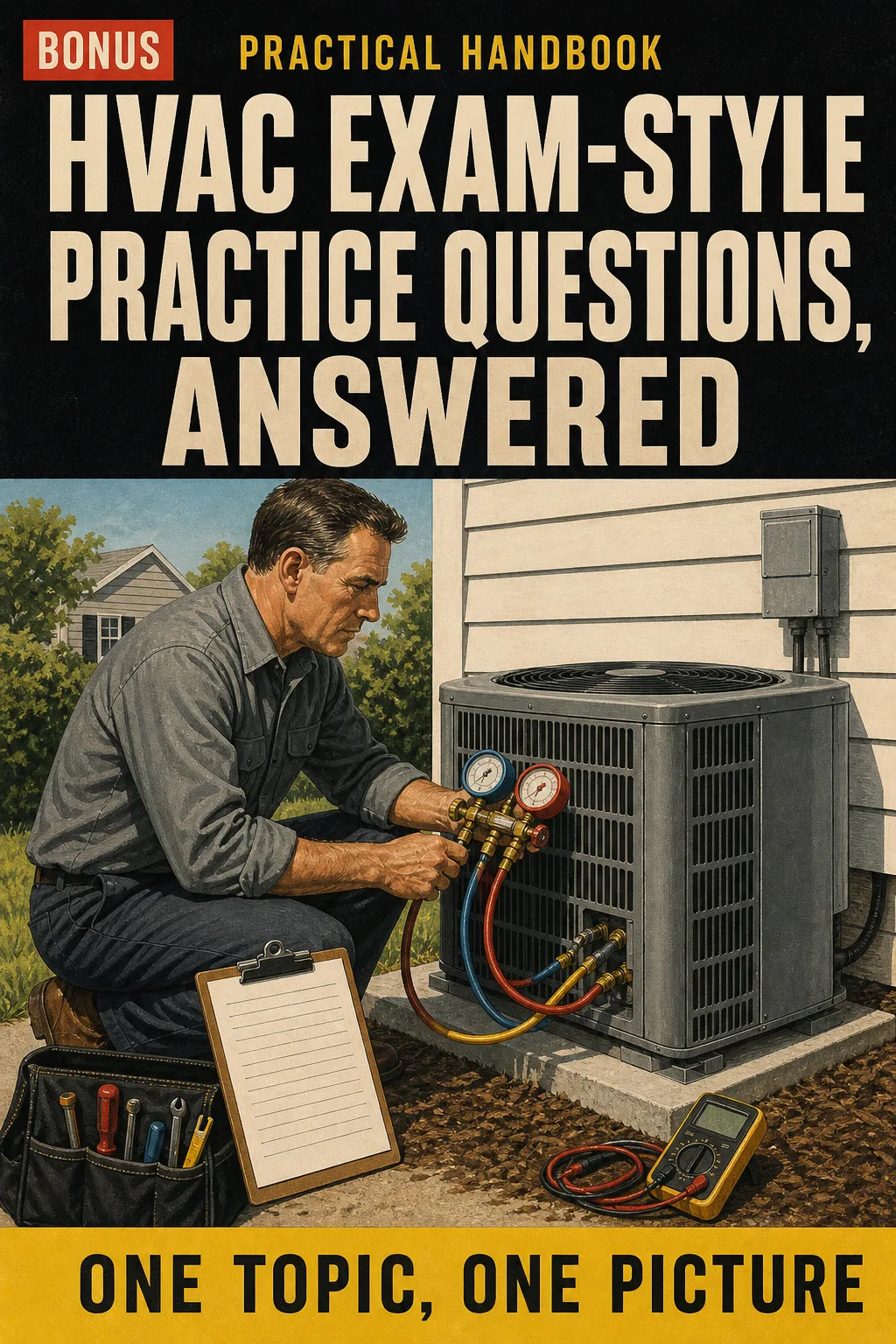
HVAC Exam-Style Practice Questions, Answered

BONUS 1: «HVAC Exam-Style Practice Questions, Answered»

Value on its own: US$ 17.90

Test yourself on the cycle, gauges, electrical and safety with exam-style questions, each with the answer and a one-line why, so you know what to review before test day.

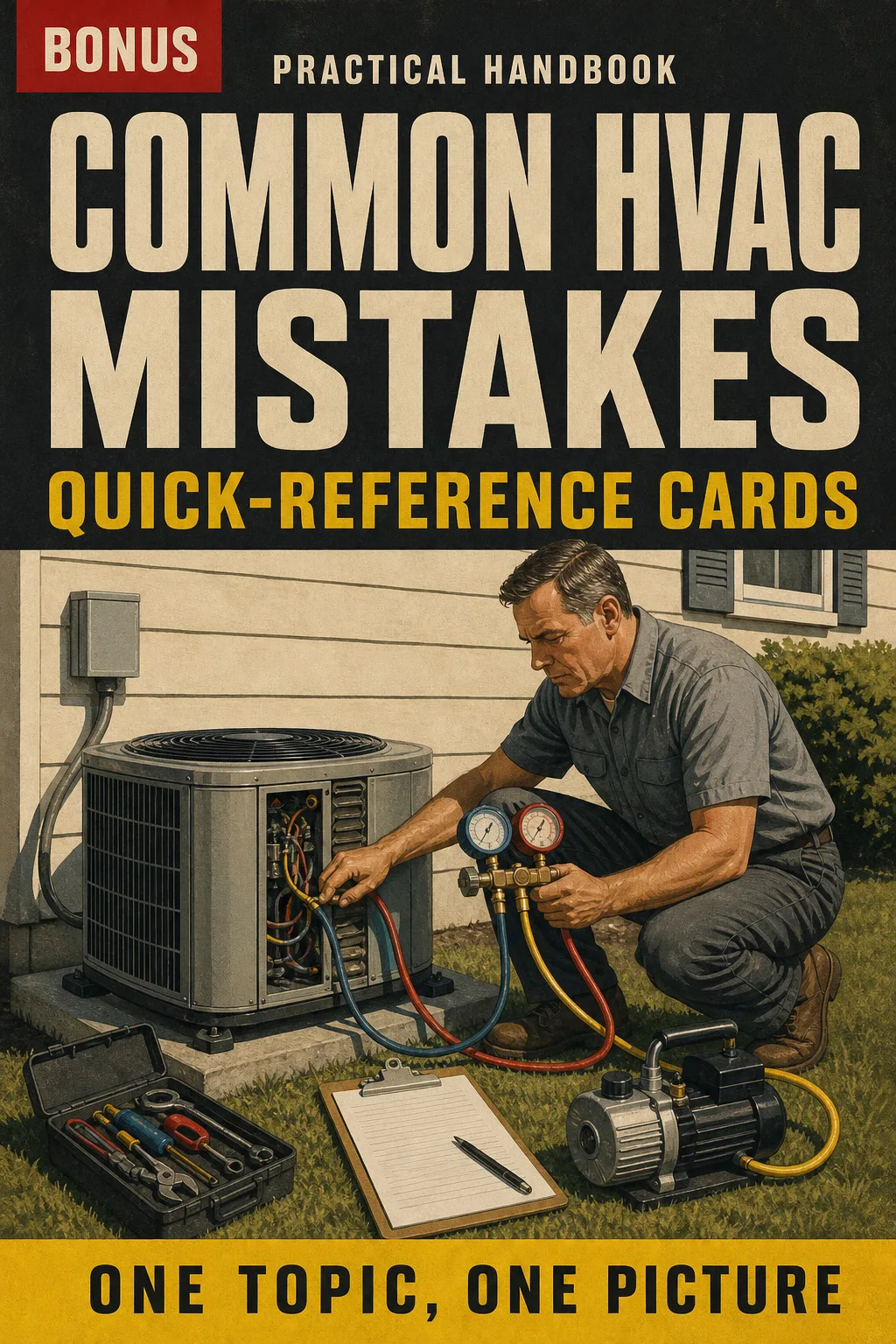
Common HVAC Mistakes: Quick-Reference Cards

BONUS 2: «Common HVAC Mistakes: Quick-Reference Cards»

Value on its own: US$ 14.90

The most frequent field and exam mistakes (adding refrigerant before checking airflow, mixing up superheat and subcooling, skipping the capacitor test) on printable cards to keep in the truck.

HVAC Technician Illustrated with 2 Free Books

  • HVAC Technician Illustrated: 68 illustrated pagesUS$ 63
  • BONUS 1: HVAC Exam-Style Practice Questions, AnsweredUS$ 17.90
  • BONUS 2: Common HVAC Mistakes: Quick-Reference CardsUS$ 14.90
  • High-resolution PDF to printIncluded
Total value US$ 95.80
YOUR PRICE:
US$ 27
You save US$ 68.80
YES, I WANT HVAC TECHNICIAN ILLUSTRATED FOR US$ 27

📄 This is a digital PDF book sent to your email: nothing is printed or shipped.

Secure purchaseEncrypted payment30-day guarantee

PDF by email: We email you HVAC Technician Illustrated as a PDF, together with the two free books. It's a single payment: no installments, no extra charges.

Who This Book Is For

You're an apprentice or in trade school

You're an apprentice or in trade school

You see the whole system drawn first, so every class and every ride-along fits into a picture you already have.

Your EPA 608 exam is coming up

Your EPA 608 exam is coming up

Core, Type I, II and III, recovery, the 80% rule and the A2L rules, each drawn on its own page, plus practice questions with the answer and a one-line why.

You already take the HVAC calls

You already take the HVAC calls

Superheat, subcooling, airflow and wiring in the same order every time, printed and kept in the truck for when a call doesn't add up.

Everything You Get Today

US$ 95.80US$ 27
YES, I WANT HVAC TECHNICIAN ILLUSTRATED FOR US$ 27

📄 This is a digital PDF book sent to your email: nothing is printed or shipped.

30DAYS
GUARANTEE

30-Day Guarantee

Try HVAC Technician Illustrated for 30 days, bonus books included.

We refund everything if the file won't open, if the book isn't what you see here, if you were charged twice or if the email doesn't arrive. Just email us.

You pay once. No subscriptions.

Frequently Asked Questions

Is it for me if I already work in HVAC?

Yes. It starts with the cycle, but it goes on to charging by superheat and subcooling, amp draw vs. RLA, ladder diagrams and the troubleshooting order. It also works for apprentices and for maintenance techs who get the HVAC calls.

Where does the content come from?

The refrigerant material is checked against current EPA rules: Clean Air Act Section 608 (40 CFR Part 82, Subpart F) and the AIM Act Technology Transitions rule (40 CFR Part 84), which covers the move to lower-GWP refrigerants like R-454B and R-32 and working safely with A2Ls. Everything else is standard residential HVAC practice. Always follow the manufacturer's instructions and your local code.

Is this official material?

No. It's an independent illustrated study book, not affiliated with the EPA or any certifying body, and it doesn't give you a certification. EPA 608 certification comes only from passing the exam with an EPA-approved certifying organization.

I already have my course manual and free videos. Why this, and does it replace my training?

Every topic is drawn on its own page, in the same order, so you find it and review it in a minute instead of digging through a manual or ten videos. It doesn't replace a training program, supervised field work, manufacturer instructions or local code: it's for understanding and reviewing what you're learning.

Are the practice questions the ones on the exam?

No. They're written for this book in exam style, each with the answer and a one-line why. They aren't official questions from any exam.

When and how do I get it?

The book and the 2 bonus books come as PDFs by email, sent to the address you enter at checkout.

Do I have to pay every month?

No. It's a one-time payment, with no subscription.

Can I have it on paper?

Yes. It's a PDF made to print. Print the whole thing or just the pages you need and keep them in the truck.

How does the refund work?

You have 30 days. We refund everything if the file won't open, if the book isn't what you see on this page, if you were charged twice or if the email doesn't arrive: just email us.

Before You Close This Page

No more rereading without it sticking.

Superheat? You see it drawn, and that's it.

You get to the call, or the exam, knowing where everything is.

Drawings make studying faster.

The book is right below.

One-time payment: US$ 27 · Guarantee: 30 days · PDF by email

YES, I WANT HVAC TECHNICIAN ILLUSTRATED FOR US$ 27

📄 This is a digital PDF book sent to your email: nothing is printed or shipped.